
Have you ever looked at your weight on a scale and wondered, “Am I at a healthy weight for my height and age?” You are not alone. Many people ask this question, especially when they notice changes in their body or compare their weight with friends and family.
The truth is that there is no single ideal weight that works for everyone. Two people can have the same height and age but look completely different. One person may have more muscle, while another may naturally carry more body fat. Both factors can affect the number you see on the scale. So, instead of worrying about one perfect number, it is better to understand what a healthy weight means for your body.
What Is the Ideal Weight for Height and Age?

Your healthy weight depends on several things, including your height, age, body composition, daily activity, and general health. Age matters too, but it does not automatically mean that you should weigh a certain amount.
For example, a person who is 5 feet 6 inches tall may have a different healthy weight from someone who is 6 feet tall. Even two people who are the same height may have different healthy weights because their bodies are not exactly alike. For adults aged 20 and older, BMI is one common way to estimate whether a person’s weight falls within a generally healthy range. However, it is only a starting point, not a complete picture of someone’s health.
Healthy Weight Chart According to Height
If you want a quick idea of what a healthy weight might look like for your height, the chart below can help. These are approximate ranges for adults aged 20 and older, based on the standard healthy BMI category.
Keep in mind that these numbers are only a general guide. They do not mean that everyone must stay within a specific number to be healthy. Your muscle mass, medical history, and other individual factors can make a difference.
| Height | Approximate healthy weight |
| 5 feet (152 cm) | 43–58 kg |
| 5 feet 2 inches (157 cm) | 46–61 kg |
| 5 feet 4 inches (163 cm) | 49–66 kg |
| 5 feet 6 inches (168 cm) | 52–70 kg |
| 5 feet 8 inches (173 cm) | 55–75 kg |
| 5 feet 10 inches (178 cm) | 59–79 kg |
| 6 feet (183 cm) | 62–83 kg |
Does Age Really Matter When It Comes to Weight?
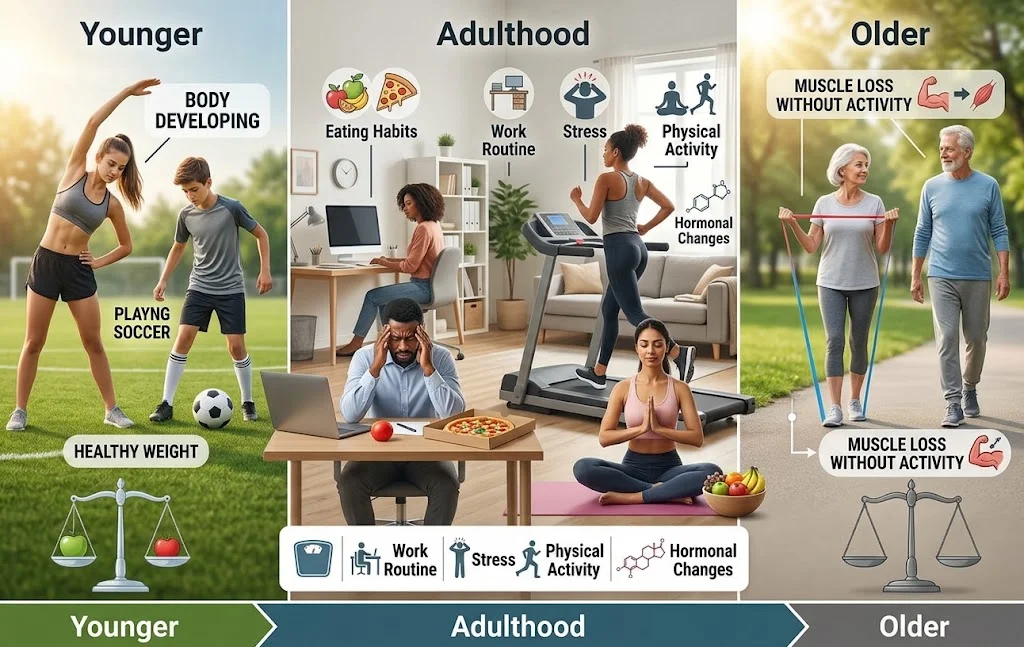
Yes, age can affect your body, but perhaps not in the way you might expect. When you are younger, your body is still developing. During adulthood, your weight may change because of your eating habits, work routine, stress, physical activity, or hormonal changes. As you get older, you may also lose some muscle if you are not physically active.
This is why your weight at 20 may not be exactly the same as your weight at 40 or 50. That does not automatically mean something is wrong. For children and teenagers, weight needs to be assessed differently because they are still growing. Adult weight charts are not suitable for judging whether a child or teenager has a healthy weight.
Why the Number on the Scale Does Not Tell the Whole Story
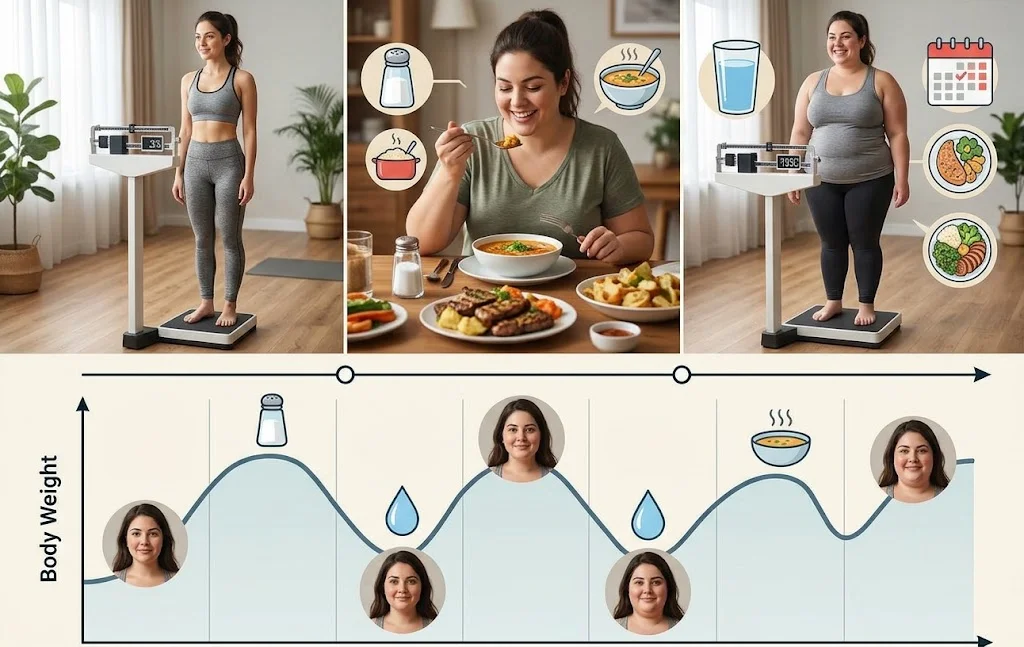
One thing people often forget is that body weight can change from day to day. Eating a salty meal, drinking more water, hormonal changes, or simply having more food in your digestive system can temporarily increase your weight. That small increase does not necessarily mean you have gained body fat. Muscle also matters. Someone who exercises regularly may weigh more than expected because muscle contributes to body weight.
This is one reason why judging your health only by your weight can be misleading. Instead of checking the scale constantly, pay attention to your energy levels, strength, daily habits, and how you feel overall. If you are concerned about your weight, a healthcare professional can help you understand what is appropriate for your individual situation.
Simple Ways to Maintain a Healthy

- You do not need an expensive diet plan or a strict workout routine to start taking care of your health. In many cases, simple habits that you can follow consistently are more useful than extreme changes.
- Eat balanced meals. Try to include vegetables, fruits, protein-rich foods, and whole grains in your daily diet. You do not have to give up every food you enjoy. Balance and portion sizes matter.
- Move your body every day. Walking is a practical way to stay active, especially if you spend most of your day sitting. You can gradually add other activities that you enjoy.
- Get enough sleep. Poor sleep can affect your energy, appetite, and daily routine. Most adults need around seven to nine hours of sleep each night.
- Avoid comparing your body with others. Social media often shows edited pictures and unrealistic body standards. Your health should not be judged by how closely you resemble someone else.
- Be patient with yourself. Healthy weight changes usually take time. Extreme dieting and skipping meals are not necessary for building healthier habits.
When Should You Be Concerned About Your Weight?

Being slightly above or below a general weight range does not automatically mean that you have a health problem. However, sudden or unexplained weight changes should not be ignored. If you are losing weight without trying, gaining weight rapidly, or experiencing unusual symptoms, it is worth speaking with a healthcare professional.
A doctor or registered dietitian can consider your medical history, eating habits, activity level, and other factors instead of relying on a weight chart alone.
Final Thoughts
Your ideal weight is not simply a number you need to reach to look a certain way. It is about finding a healthy balance that suits your body and supports your everyday life. Some people naturally weigh more than others, even when they have the same height.
What matters is understanding your own body, developing realistic habits, and avoiding unnecessary pressure to meet unrealistic expectations. Rather than chasing a perfect number on the scale, focus on eating well, staying active, sleeping properly, and looking after your overall health. Small changes that fit your real life can make a bigger difference than following a strict routine you cannot maintain.