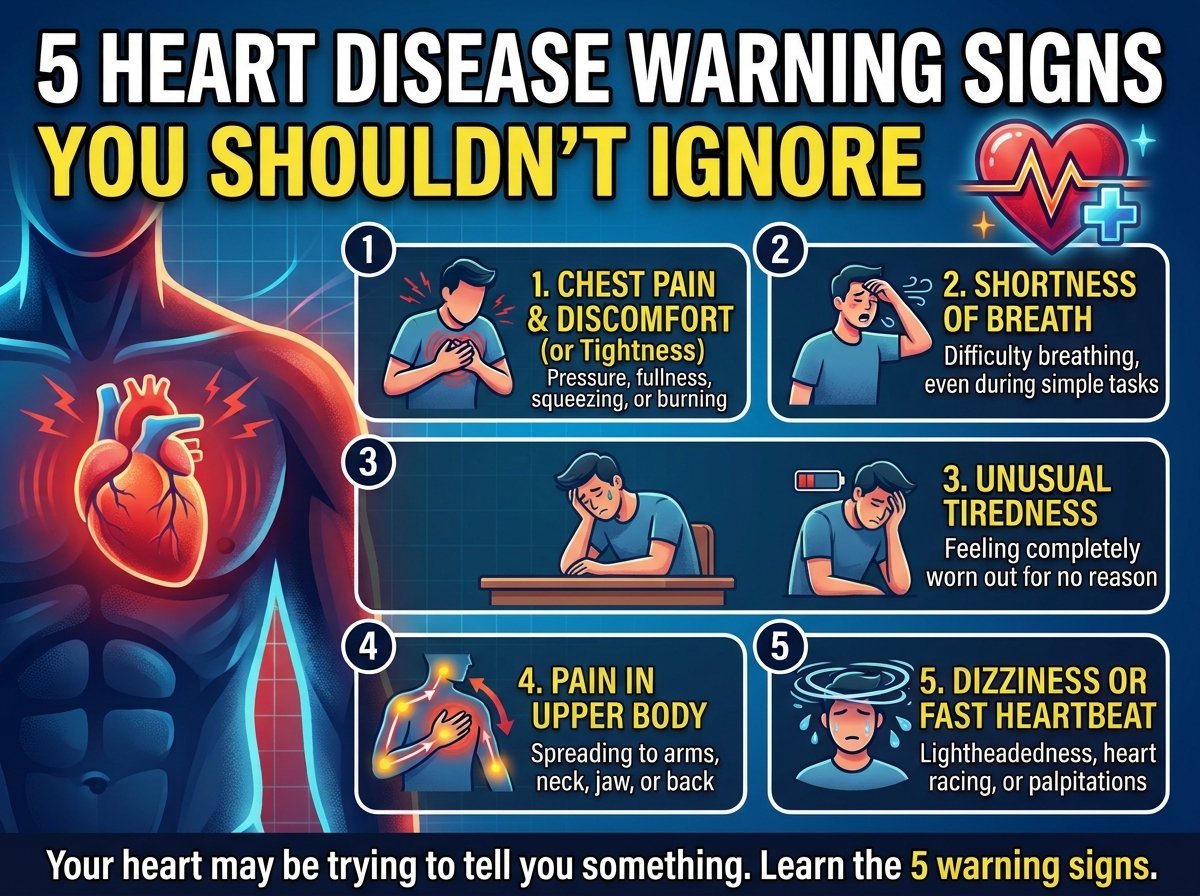
Your heart may be trying to tell you something. Here are 5 warning signs you should never brush off. Have you ever felt unusually tired for no clear reason? Or maybe you got out of breath doing something that normally feels easy, like climbing the stairs. Most of us would probably blame a busy day, poor sleep, or stress and move on. But what if your body is trying to tell you something more important?
Heart disease doesn’t always show up with sudden, severe chest pain. Sometimes, the warning signs are easy to miss or feel like everyday problems. Knowing what to look for can help you get medical attention when it matters most.Let’s take a closer look at five common symptoms of heart disease and why you shouldn’t ignore them.
1. Chest Pain or Discomfort: Don’t Just Brush It Off
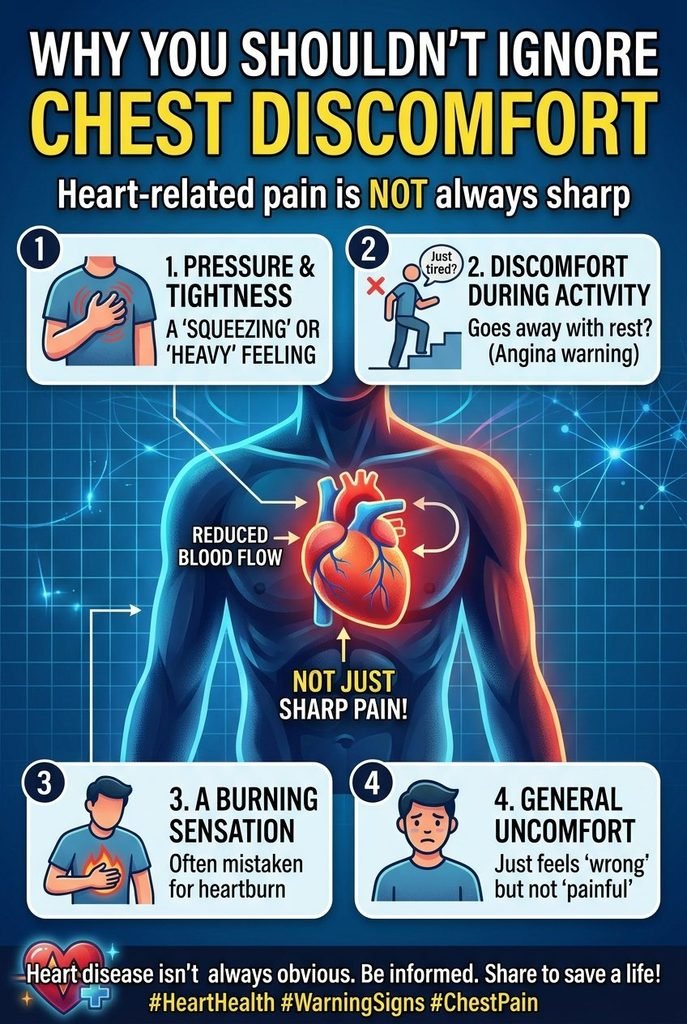
When people think about heart problems, chest pain is usually the first thing that comes to mind. But here’s something many people don’t realize: heart-related chest pain doesn’t always feel like a sharp, painful sensation.It might feel like pressure, tightness, squeezing, or a heavy feeling in your chest. Some people describe it as a burning sensation, while others feel uncomfortable rather than actually in pain.
Imagine walking up the stairs and suddenly feeling a tightness in your chest. You stop for a moment, catch your breath, and the feeling goes away. It’s tempting to think, “Maybe I’m just tired.” But that kind of discomfort can sometimes be a sign that your heart isn’t getting enough blood.
Why you shouldn’t ignore it: Chest discomfort can be linked to angina or a heart attack. Not every chest ache is heart-related, but it’s always better to take unusual or unexplained chest discomfort seriously.
2. Shortness of Breath: When Even Simple Tasks Feel Hard
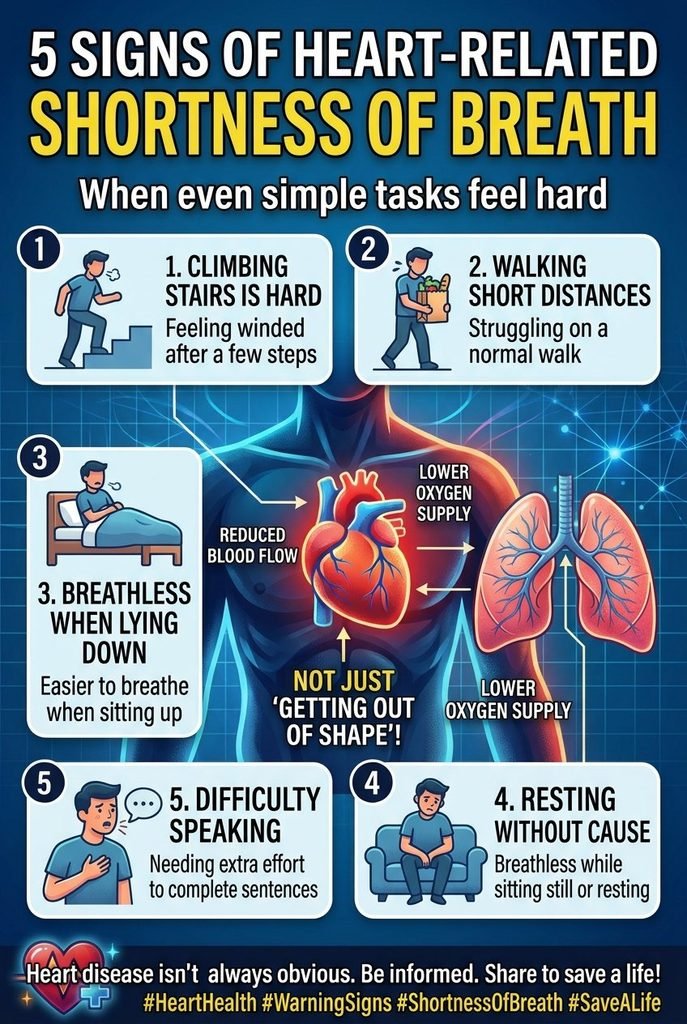
Ever noticed yourself getting out of breath doing something that used to be easy?Maybe climbing a few stairs leaves you struggling to catch your breath. Or you find yourself stopping halfway through a short walk when you normally wouldn’t think twice about it.Sure, being out of shape can make physical activity harder. But if you’re suddenly getting breathless without a clear reason, don’t automatically assume it’s nothing.
Sometimes, heart problems make it harder for your body to get the oxygen-rich blood it needs. This can leave you feeling breathless during everyday activities, when lying down, or even while resting.
Why you shouldn’t ignore it: Unexplained shortness of breath can be a warning sign of a heart condition, including heart failure or coronary heart disease. If it comes on suddenly or becomes severe, get emergency medical help.
3. Unusual Tiredness: More Than Just a Long Day
We’ve all had those days when we feel completely worn out. Maybe you didn’t sleep well, had toomuch work, or simply did more than usual.But what if you’re getting enough rest and still feel exhausted?
Unusual fatigue can sometimes be connected to heart disease. You might notice that everyday things, like grocery shopping, walking around the house, or doing household chores, suddenly take more effort than they used to.Some people feel weak or drained without really understanding why. Because this symptom can be so easy to blame on stress, age, or a busy routine, it often gets overlooked.Women may experience unusual fatigue during a heart attack, sometimes alongside other symptoms.
Why you shouldn’t ignore it: If you’re feeling unusually tired for no obvious reason, especially if it’s new or keeps happening, pay attention. If the tiredness comes with chest discomfort, breathlessness, nausea, or dizziness, seek medical advice promptly.
4. Pain in Your Arm, Jaw, Neck, or Back
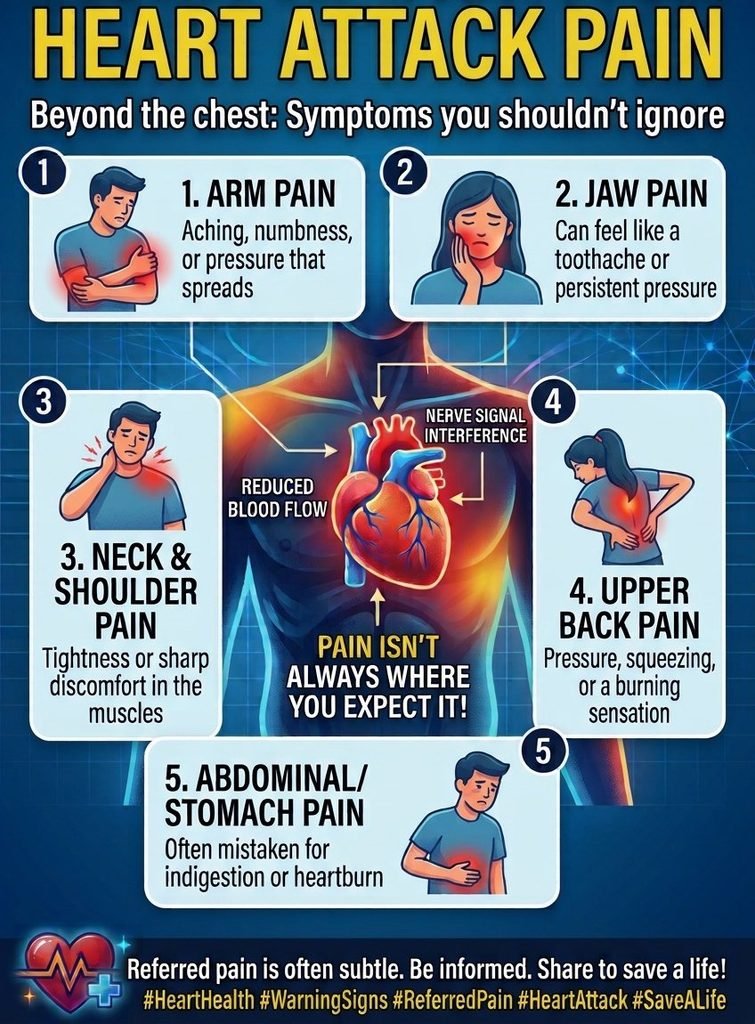
Here’s something that might surprise you: heart-related pain doesn’t always stay in your chest.Sometimes, the discomfort spreads to one or both arms, your shoulders, neck, jaw, or back. It might feel like pressure, aching, or a strange discomfort that you can’t quite explain.You might think you’ve slept in the wrong position or pulled a muscle. And sometimes, that really is the case.
But if the pain appears suddenly or comes with chest pressure, cold sweats, nausea, or shortness of breath, it could be a warning sign of a heart attack.Not everyone experiences the same symptoms. Some people, including some women, may have less obvious symptoms rather than the classic chest pain people often expect.
Why you shouldn’t ignore it: Unexplained pain in these areas, especially when combined with other heart attack symptoms, needs urgent attention. Don’t wait for it to become unbearable before getting help.
5. Dizziness, Cold Sweats, or a Racing Heart
Have you ever felt your heart suddenly start racing while you’re sitting still? Or had a moment when you felt lightheaded for no obvious reason?These feelings can be unsettling, and sometimes they happen for relatively simple reasons, such as anxiety, dehydration, or too much caffeine.But they can also be linked to heart rhythm problems or other heart conditions.
You might notice your heartbeat fluttering, pounding, beating unusually fast, or seeming to skip a beat. Some people also experience dizziness, sudden cold sweats, nausea, or a feeling that they might faint.The important thing is to notice when these symptoms happen and whether anything else comes with them.
Why you shouldn’t ignore it: Repeated palpitations, unexplained dizziness, or near-fainting should be checked by a healthcare professional. If you experience these symptoms with chest pain, severe breathlessness, or fainting, seek emergency medical help.
Can You Have Heart Disease Without Knowing It?
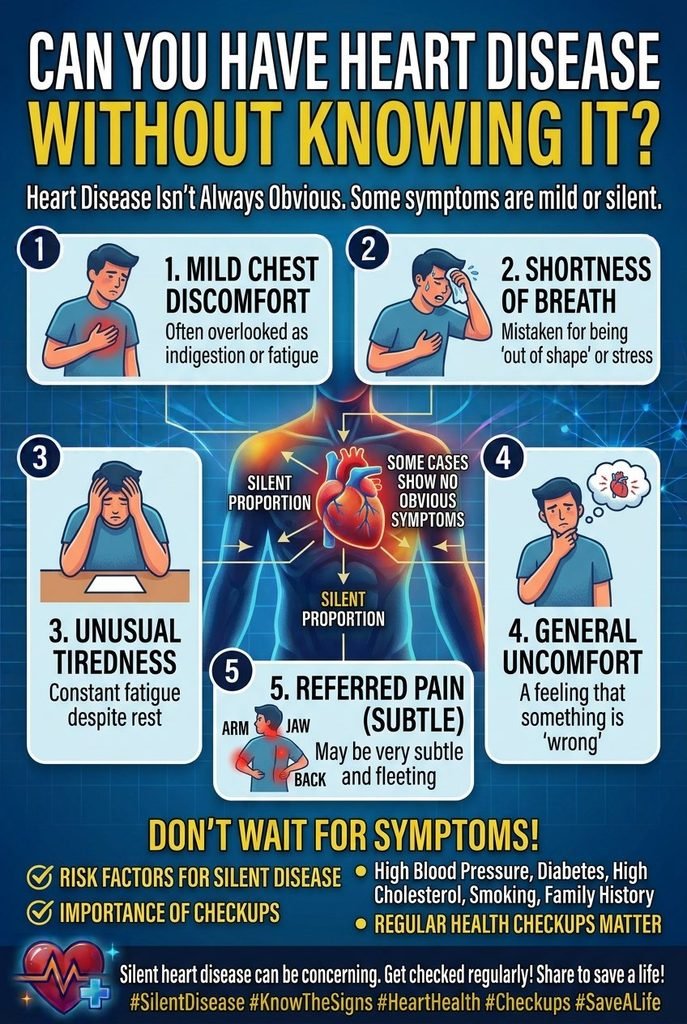
Yes, and that’s one of the reasons heart disease can be so concerning .Some people have heart disease for a long time without noticing obvious symptoms. Others experience symptoms that seem too mild to worry about or mistake them for something else. That’s why regular health checkups matter, especially if you have high blood pressure, diabetes, high cholesterol, smoke, or have a family history of heart disease.
And remember, having one of these symptoms doesn’t automatically mean something is wrong with your heart. Many other conditions can cause similar problems. A healthcare professional can help you understand what’s going on and whether you need tests.
When Should You Get Emergency Help?
This is the part you really shouldn’t skip.If you experience chest pressure or discomfort that lasts several minutes or goes away and comes back, particularly alongside shortness of breath, cold sweats, nausea, dizziness, or pain spreading to your arm, jaw, neck, or back, call your local emergency service immediately.
Don’t wait to see if the symptoms get worse, and don’t drive yourself to the hospital if you think you’re having a heart attack.
Final Thoughts: Don’t Ignore What Your Body Is Telling You
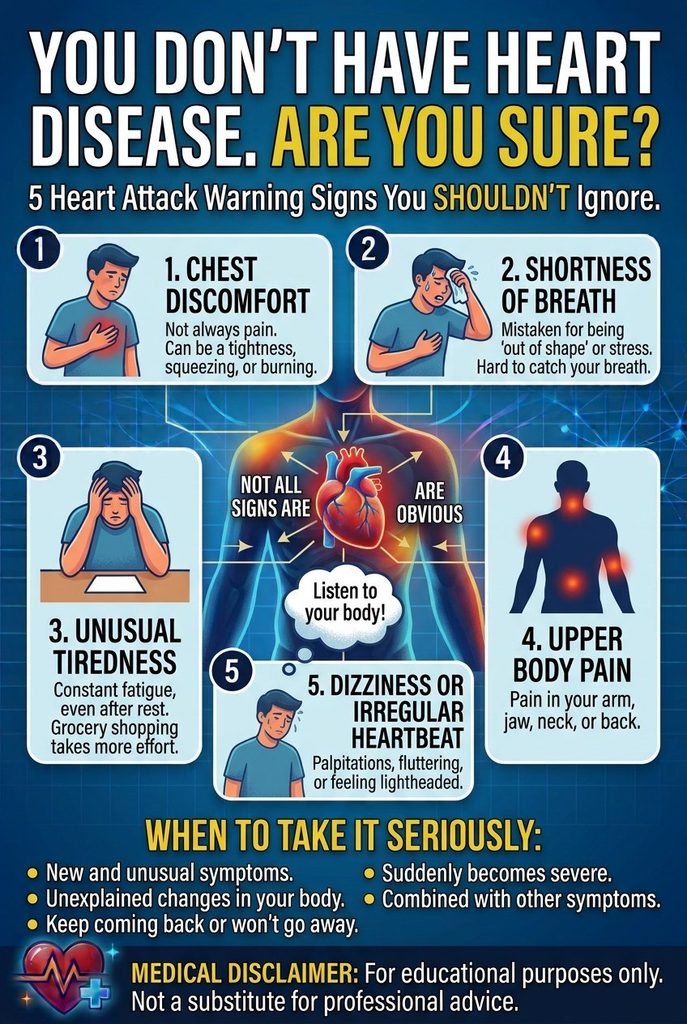
It’s easy to brush off unusual tiredness, a little breathlessness, or an ache that doesn’t seem serious. Most of us have done it at some point.But when it comes to your heart, paying attention to changes in your body really matters.Chest discomfort, shortness of breath, unusual fatigue, pain in the upper body, and dizziness or an irregular heartbeat can all be warning signs worth taking seriously.You don’t need to panic every time you feel tired or experience an ache. Just don’t ignore symptoms that are new, unexplained, keep coming back, or suddenly become severe.
Your heart works hard for you every single day. Giving its warning signs the attention they deserve could make all the difference.
Medical disclaimer: This article is for educational purposes only and isn’t a substitute for professional medical advice, diagnosis, or treatment.